
 Search
Tips and Scripts for Financial Discussions with Horse Owners
Clear financial discussions are key to maintaining strong client relationships in equine veterinary care.
By Jenny Alonge, D.V.M.
Veterinarian
Dec 12, 2025 - 7 min read



Owning a horse is a rewarding but often costly commitment, and many horse owners have a deep emotional connection with their equine companions. These factors can make financial conversations in equine veterinary practices challenging.
However, approaching these discussions with honesty and transparency from the start can help avoid misunderstandings and build trust. When navigated thoughtfully, these conversations can strengthen relationships with your clients and help ensure better care outcomes. This article will guide you through confidently and compassionately navigating financial talks with horse owners.
Why Financial Conversations Are Critical in Equine Veterinary Care
Equine veterinary medicine frequently involves high-cost services like advanced lameness evaluations, diagnostic imaging, emergency field visits and hospitalization. Without upfront, candid conversations about the expected costs, owners may be surprised — potentially leading to delays in care, compromised treatments, emotional stress or even distrust.
Openly discussing treatment costs can help foster relationships grounded in trust and respect. It also allows you to better understand the owner’s financial situation and treatment goals associated with the horse’s age, intended use and prognosis, enabling you to tailor care options.
Tips for Approaching Financial Discussions With Horse Owners
Financial discussions can feel awkward, particularly when clients are worried about their horse’s well-being. Here are practical tips to help you approach these conversations with confidence and compassion:
Be upfront
Discuss costs before treatment begins. This helps horse owners make informed decisions without feeling pressured.
Example script: “Based on Ruby’s exam, this looks like a medical colic, meaning we may be able to manage it without surgery. That’s good news, but I want to be upfront about what treatment involves and what it may cost.”
Be clear and direct
Keep in mind that horse owners may not know the technical terms for certain conditions or treatments. Avoid jargon, communicate clearly and provide details, asking the client if they understand what you are telling them. In addition, be transparent about pricing and refrain from using an apologetic tone when discussing the cost of care.
Example script: “Depending on how your horse responds, total costs can range from $X - $XXX. If things escalate and surgery becomes necessary, that’s a separate conversation — we’d be looking at $XX -XXXX or more.”
Practice empathy
A sick or injured horse can be extremely upsetting for a client, and they may have difficulty making a decision, especially if they have financial concerns. Ensure the horse owner knows you are on their side and willing to discuss options for the best possible outcome. Other ways to show empathy include using the horse’s name, practicing active listening and not hurrying the conversation.
Example script: “I know that’s a lot to take in. We’ll walk through each step together, and I’ll keep you updated before we move forward with anything. If you’d like, I can also share financing options or help prioritize what’s essential right now. Our goal is to keep Ruby comfortable and make sure you feel informed and supported every step of the way. I know how much she means to you. Let’s take this one step at a time.”
Offer tiered treatment options
When medically appropriate, offer a range of diagnostic or treatment plans at varying price points. Be clear about what’s included with each option. Giving your clients options allows them to make the decision that’s best for them.
Example script: “Let’s look at what options we have to move forward with treatment today. I know this is an unexpected cost. We want to make sure you feel comfortable with both the treatment plan and how it fits in your budget. Many clients find it helpful to explore payment options, so cost doesn’t delay care. Would you like to hear more about those? Sometimes seeing the numbers laid out makes things feel more manageable — let’s look at it together.”
Provide written documentation
Provide a written estimate with a breakdown of costs to ensure your client is aware of the expected final bill. This can help reduce misunderstandings and build trust. Have the client acknowledge the estimate before care proceeds, especially for procedures such as surgeries.
Example script: “This is an estimate, so if anything changes during treatment – like if we need additional medications – we will keep you informed and get your approval before proceeding. Thanks again for trusting us with Ruby’s care. Before we move forward, I’d like to walk you through the treatment estimate so you have a clear picture of what’s involved.”
Provide financing options
Being faced with a large veterinary bill can be distressing for horse owners. Offering a budget-friendly financing option, such as the CareCredit credit card, can help ensure cost isn’t a barrier to necessary veterinary care. According to Synchrony's Equine Lifetime of Care Study, 54% of horse owners don’t know what financing options their veterinarians provide.1 Educating your clients about available financing can provide much-needed peace of mind.
Example script: “Ruby’s procedure and follow-up care will cost between $X and $XX. To help make these costs more manageable, we accept the CareCredit credit card, a financing option for veterinary expenses. I can share a link or give you a brochure if you are interested.”
Be patient
In some cases, your client may need time to think about the options for their horse’s care. Be understanding and follow up in the next few days to see if they have any additional questions.
Example script: “This is a big decision, and I want to make sure you have all of the information, including the financial commitment. Let’s go over the estimate for Ruby together so you know exactly what to expect, including sedation, medication and any follow-up care.”
Transparent Communication Can Build Long-Term Client Relationships
Clients range from recreational owners to professional trainers and breeders, each with different priorities and communication styles. Owners are often managing complex emotional and financial considerations. Clearly explaining the treatment options and being transparent about the costs indicates that you are partners in their horse’s care, fostering trust and mutual respect. In addition, open communication may help prevent misunderstandings, and satisfied clients might be more inclined to pay on time, follow recommendations and refer others.
Leveraging Tools and Technology to Simplify Financial Discussions
Equine veterinarians can leverage a range of tools and technologies to help make discussing finances easier for you and more transparent for your clients, including:
- Practice management software (PMS). PMS integrates client records, treatment plans, invoicing and estimates to streamline financial communications. This software can be used to make customizable estimates, create templates for common procedures such as lameness workups or dentals and send invoices or cost summaries via email or text message.
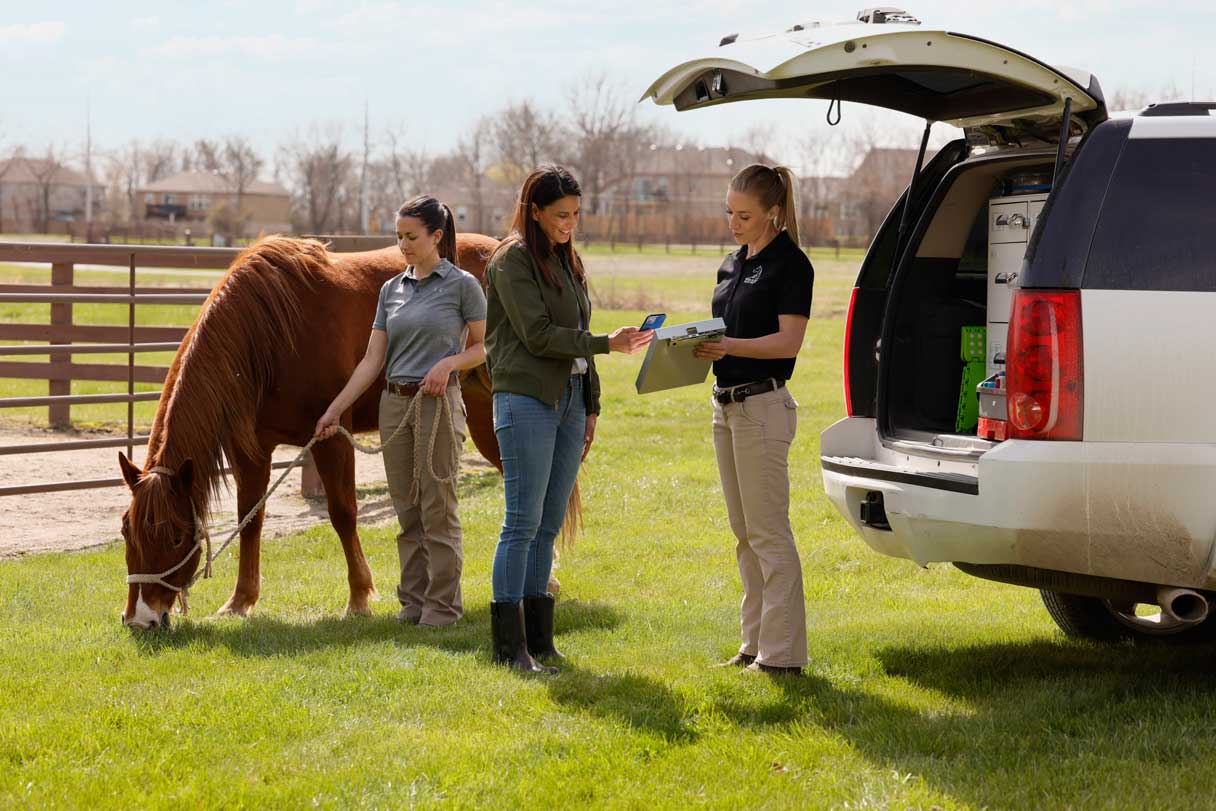
- Mobile-friendly tools. Mobile equine veterinarians can utilize tablet- or phone-accessible tools to generate estimates and capture digital signatures.
- Client portals. Digital client portals can allow horse owners to acknowledge payment policies, review estimates and choose a treatment tier in a non-confrontational manner.
- Integrated payment and financing options. Many PMS platforms allow direct integration with services, such as CareCredit, to help bridge cost-sensitive conversations.
Build Trust and Foster Communications With Your Clients
Addressing finances openly is an essential part of providing excellent care. By having cost discussions early and with transparency, you can help empower horse owners to make informed decisions and build lasting trust. Use the tips and example scripts above to help you improve your financial communication skills and maintain strong client relationships.
A Flexible Financing Solution for Your Equine Veterinary Practice
Looking for a way to give your clients a flexible way to pay for care throughout their horse’s lifetime? Consider offering the CareCredit credit card as a financing solution. CareCredit allows horse owners to pay for equine veterinary services over time while helping to enhance the payments process for your practice.
When you accept CareCredit, clients can see if they prequalify with no impact to their credit score, and those who apply, if approved, can take advantage of special financing on qualifying purchases.* Additionally, you will be paid directly within two business days.
Learn more about the CareCredit credit card as a veterinary financing solution or start the provider enrollment process by filling out this form.
Expert Bio
Jenny Alonge, D.V.M., has 17 years of experience as a veterinarian specializing in equine medicine and surgery. She blends her clinical background and writing expertise to produce veterinary content that is engaging and informative.

Healthcare payment and financing solution
The CareCredit health and wellness credit card helps improve the payment experience for patients and clients, and your financial performance.
Get StartedReady to help more patients and clients get the care they want and need?
Get Started
Related Content
View All

 Guides
 Articles
Ready to help more patients and clients get the care they want and need?
Get Started*Subject to credit approval.
The information, opinions and recommendations expressed in the article are for informational purposes only. Information has been obtained from sources generally believed to be reliable. However, because of the possibility of human or mechanical error by our sources, or any other, Synchrony and any of its affiliates, including CareCredit, (collectively, “Synchrony”) does not provide any warranty as to the accuracy, adequacy or completeness of any information for its intended purpose or any results obtained from the use of such information. All statements and opinions in this article are the sole opinions of the author. The data presented in the article was current as of the time of writing. Please consult with your individual advisors with respect to any information presented.
© 2025 Synchrony Bank.
Source:
1 Equine Lifetime of Care Study, Synchrony, 2023. (CareCredit is a Synchrony solution.)