 Search


Walking your dog can be one of the most enjoyable parts of your (and your dog’s) day, but without proper leash training, it can quickly turn into a stressful event. Leash training allows your dog to explore the world confidently and safely while getting the physical and mental exercise they need. Yet for many pet parents, leash training can be a frustrating challenge.
With some patience and the right approach, your daily walks can be a rewarding experience that strengthens your bond and sets the stage for a lifetime of happy adventures together.
Leash Training Is Essential for Your Dog’s Health and Safety
Leash training plays a crucial role in keeping your dog safe as you explore the world together. Four of the biggest reasons why this skill is so important:
- It allows you to expose your pup to new people, environments and other dogs in a safe, controlled and positive way
- It helps you physically guide and direct your pup and train good behaviors
- It may prevent accidents and injuries, especially around traffic or other animals
- It teaches your pup to follow and engage with you, fostering valuable relationship-building
It just really helps with their physical and mental stimulation. Providing that is really beneficial to them and their well-being.
Antonio Diaz
Professional Pet Trainer


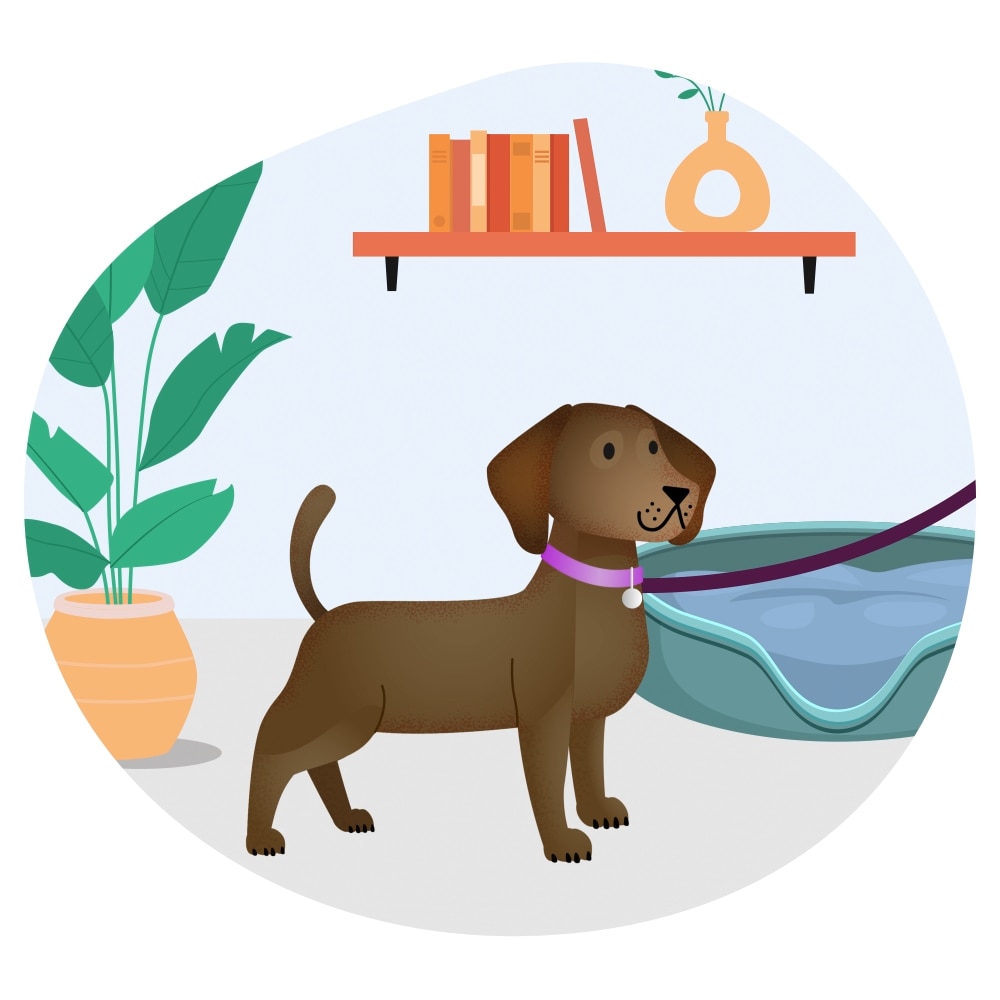
With conditioning, some dogs walk really well with a head halter, which is like a horse bridle. It’s not a muzzle and doesn’t prevent them from opening their mouth, and it can be helpful with large breeds.
When it comes to leashes, consider a lightweight 6-foot leash (4-foot for a shorter person or taller dog like a Great Dane) that’s supple and flexible, not thick and rigid. They’re typically made of nylon, neoprene or leather and make it easier to keep your dog close.
Retractable leashes are not recommended for training because they can get tangled, which may lead to injury (the leash line is thin and can burn or cut your hand, your leg or your dog’s legs). They can also malfunction or break, and it’s not easy to reel your dog back in. Finally, when your dog pulls and the line releases due to the tension, it reinforces pulling and doesn’t teach your dog leash boundaries.
We want to keep the leash loose — it's okay to apply pressure to guide them, but you don't want to be yanking them around.
Antonio Diaz
Professional Pet Trainer
Step-by-Step Guide to Leash Training Your Dog
Teaching your dog to walk politely on a leash takes time and consistency, but it’s one of the most rewarding skills you can develop together. A structured, step-by-step approach helps your dog understand what’s expected, keeps training sessions positive and builds confidence for both of you.
Step 1: Introduce your dog to the collar and leash
The very first step to successfully loose leash walking your puppy or dog is to familiarize them with their collar or harness and leash. Start by putting on their collar or harness, then reward them with treats or engage in play to capture their attention and associate their collar/harness with a happy, fun time.
Next, attach their leash to their collar/harness and begin luring them with food/treats to the side of your body you want them to walk on. Reward them when they are at your side.
Step 2: Teach your dog to walk next to you indoors
Once your dog consistently comes to your side, the next step is to say the cue (commonly “heel” or “with me”) as they arrive and you begin to walk forward. Continue practicing this until they’re walking with you for several steps.
If your puppy starts to get distracted, that’s OK. Make a kiss noise and cheerfully encourage them verbally while luring them back to your side. If your puppy is getting tired, it’s a good idea to end the training session.
Step 3: Practice leash walking outdoors in a controlled environment
Choose quiet, low-distraction locations to begin outdoor training. An empty parking lot or a quiet street with a cul-de-sac are great places to train. Avoid training on grass until your pup consistently walks nicely on a leash. Your first few walks should be kept short, as your puppy may be overstimulated regardless of the location you choose.
When you notice your dog becoming distracted or about to lunge at something, make a kiss noise or say your chosen cue (such as “heel” or “let’s go”) to redirect their attention before the behavior occurs. Encourage them to look at you, and reward them for maintaining focus as you continue your walk.
The goal here is to build engagement, helping your dog stay attentive to you and remain by your side.
Step 4: Correct pulling and lunging behavior
If your pup pulls or lunges, or is just generally distracted, there are a few things you can do to correct the behavior:
- Always have your dog walk on the same side for consistency and so they don’t learn to run from side to side.
- If your dog is pulling, just stop (this is called the “Be a Rock” method). Don’t pull the leash, don’t yell at them, just stand there. As soon as they turn around and/or move toward you, give them your cue and give them a treat next to your leg. After your dog eats the treat, start to move forward again.
- If your puppy continues to pull, turn around and walk in the opposite direction. Treat this as a fun drill to capture their attention. When your puppy comes close to you, give your chosen cue (like “heel”), reward them and then repeat as needed. Once they focus on you and walk nicely by your side, you can resume your regular walk.
The key is to be patient, reward positive behavior (walking next to you, even if only for a few steps) and ignore unwanted behaviors. If your dog continues to pull incessantly, it likely means the environment is too distracting.
Don’t forget to reward your pup when they are staying next to you, and especially when they look at you.
We want to keep leash training fun! Reward your dog for walking nicely beside you — pet them, cheer them on and give a treat.
Antonio Diaz
Professional Pet Trainer
Step 5: Gradually increase walk duration and distractions
As your dog gets used to loose leash walking and becomes more confident, you can gradually increase the duration and the distractions. A good rule of thumb is that if it feels easy, you’re probably in a good spot.
Start by walking your puppy for a longer period of time in a less distracting area, then try a shorter amount of time in a more distracting area.
Here’s an example: If you can walk your puppy for 20 to 30 minutes around a quiet lake with a few birds, plan to walk them for 5 to 10 minutes at a busy park with people throwing a ball and riding bikes. Once you can build them back up to 20 to 30 minutes at the park, move to the next distracting area and go back down in minutes.
Increasing the duration and distractions at the same time can be very difficult for a young dog.
Common Leash Training Mistakes to Avoid
Even with the best intentions, mistakes happen. Simple missteps can confuse your dog and undermine their confidence. To set your pup up for success, be sure to avoid:
- Inconsistent cues or training
- Overly long training sessions (frustrating for you and your puppy)
- Yanking or jerking the leash (can make your dog more nervous, confused and reactive)
- Using retractable leashes during the training process
Troubleshooting Leash Training Problems
Some puppies may struggle with leash manners or become anxious and reactive during walks. Pulling, lunging or freezing in fear are common challenges that can make daily outings stressful for both you and your dog. The good news is that these behaviors can often be improved with patience and the right approach. By responding calmly and consistently, you can help them feel more secure and focused.
If your dog pulls constantly and “Be a Rock” doesn’t work, they are likely overstimulated. Reduce the distractions and/or decrease your walking time. You can also take a break to play and reconnect, which can help refocus their attention on you. Sometimes the environment is simply more interesting to them, so injecting a bit of fun can go a long way in reengaging your pup.
If your dog lunges or barks at other dogs or people, pay attention to their body language and try to redirect their attention with a kiss noise, gentle touch or leash pressure and reward before they start lunging or barking.
If your puppy is nervous, anxious or fearful during walks, don’t force them to “get through it,” as this will only make them more stressed. And even if they are nervous or scared of things that seem silly, a little patience will go a long way.
You have two options: desensitizing them to their fears by slowly exposing them to “scary” things, or counterconditioning them to associate the fears with something positive.
For example, if your dog barks and lunges at other dogs, desensitizing would be going to the outskirts of a park and watching dogs from a safe distance until your dog feels comfortable going closer. Counterconditioning would still mean giving your dog space from the other dogs, but giving them a treat or reward when the other dog approaches. Your puppy will start to associate other dogs approaching with getting a treat instead of being afraid.
If you are concerned that your puppy isn’t getting enough exercise because they aren’t ready for walks, give them plenty of playtime and interactive toys at home.
All of that being said, if your puppy is completely shut down during walks or you aren’t making any progress, you may want to consult an experienced dog trainer.
Additional Tips for Successful Leash Training
There are other tools you may want to have on hand when leash training your puppy or dog:
- Clickers, if you are clicker training
- Safety gear for nighttime or low-visibility walks
- Treats to reinforce them walking next to you
Once your dog understands the basics, these extra tips can help make every walk smoother and more enjoyable:
- Combine leash training with other obedience commands, such as “sit-stay” and “down-stay”
- Incorporate mental and physical enrichment outside of walks
- Keep training sessions short, fun and frequent
- Reward good behavior with treats, praise and play
A Valuable Skill for Your Puppy or Dog
Leash training is one of the most important skills you can teach your dog, creating the foundation for safe, enjoyable walks. Start slow, use the right tools and stay consistent to build trust and good habits. Remember, progress takes time, but you’ll soon find that leash training turns everyday walks into one of your favorite activities.
Frequently Asked Questions About Leash Training a Dog
Do you still have questions about leash training? Here are answers to some commonly asked questions.

CareCredit Credit Card Financing for Dogs
The CareCredit credit card provides a convenient way to pay for your dog’s vaccinations and other health and wellness expenses, including exams, medications and products at providers in the CareCredit network.* Continue your wellness journey by downloading the CareCredit Mobile App. You can find a provider on the go, manage your CareCredit account and easily access the Well U blog for more great articles, podcasts and videos. Use our Acceptance Locator to find a veterinarian that accepts CareCredit to help keep your pet healthy and happy for a lifetime of love.
In addition to pet care, you can also use your CareCredit credit card for dentistry, cosmetic, vision, hearing, health systems, dermatology, pharmacy purchases, spa treatments and so much more within the CareCredit network. How will you invest in your health and wellness next?
Expert Bio
Antonio Diaz
Antonio Diaz, founder of Leader of the Pack K9 Training, is a professional dog trainer and behavior expert with more than a decade of experience in rewards-based balanced training and behavior rehabilitation. Known for his clear communication and ability to simplify complex behavioral concepts, he helps owners develop well-mannered dogs through relationship-based leadership. As director of education for the International Association of Canine Professionals, Antonio helps shape industry standards, professional development and ethical training practices. He also creates online courses and serves as a canine subject matter expert for CareCredit.
Author Bio
Abbie Mood is a freelance writer with more than 15 years of experience. She has worked with clients of all sizes to create compelling content and she has written for the American Kennel Club, Marriott Bonvoy, Women’s Health Online, Headspace and more.

Related Tags
Want to share this on social media?






 VIDEO
VIDEO