

7 Top Dog Care Costs for Pet Owners to Budget For

The Synchrony/CareCredit 2025 Pet Lifetime of Care Study reveals seven major expense categories that cause the most worry for dog owners. Learn more about these expenses and tips to prepare financially.

Written by Abbie Mood

February 20, 2026

Woman high-fiving dog's paw

Dogs are more than pets — they’re family. And more than ever, it’s important to be aware of and prepared for the true cost of care to help our four-legged family members live their happiest, longest lives. Synchrony’s 2025 Pet Lifetime of Care Study dives into just that: what it costs to care for a dog over the course of its life, plus the expected lifetime expenses for households with multiple pets — and even small companion animals.

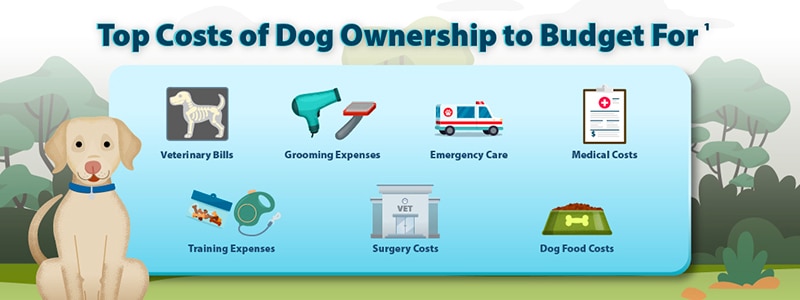
The study reveals that many owners underestimate the long-term investment of pet ownership, and experience stress when faced with unexpected or higher-than-anticipated bills. While most are willing to invest in a long, healthy life for their beloved animal family members, the research identified seven major expense categories that cause the most worry for dog owners.1

1. Veterinary Bills

Vet bills are a consistent worry for many pet owners because they’re a recurring cost: Dogs need annual exams and vaccinations, and your veterinarian may recommend other routine tests, such as bloodwork or urinalysis, from time to time.

The national average cost* of a wellness vet visit for a dog is $95, but it can range from $75 to $171. The total cost will vary based on the location of the clinic, any medications or treatments that may be needed and other factors.2

Tip: Preventive care may feel like you’re shelling out a lot of money up front, but it can help save you in the long run. Catching something early during a routine exam may prevent an emergency vet visit or more complicated treatment down the road.3

2. Surgery Costs

Your dog may someday need surgery for things like a spay/neuter, orthopedic repairs or tumor removals, to name just a few. The cost of surgery can add up quickly, and may involve the procedure itself, anesthesia, potential hospitalization, pain medications and the IV/catheter.

Tip: Having a savings account just for your pet or looking into pet insurance may help you prepare for large expenses like surgery or dental work.

3. Emergency Care

Just like humans, our pets can have unplanned accidents. From ingestion of foreign objects to sudden illnesses, emergency vet care often incurs a higher cost than routine care due to after-hours fees, urgent diagnostics and more. For example, the average cost* of an emergency vet exam for dogs ranges from $96 to $236 before you add charges for anything else that may be required, such as diagnostic tests, hospitalization or surgery.4

The vets at these locations also have additional training — emergency vets are required to complete an emergency and critical care residency program after completing a Doctor of Veterinary Medicine program and earning their veterinary licensure, which gives them another layer of expertise.5

Tip: Knowing where your closest 24/7 vet hospital or after-hours vet office is may one day save your dog’s life. And calling ahead to let the staff know you are on your way and briefing them on your pet’s situation can help speed up care once you arrive.

4. Medical Costs (Ongoing and Chronic Care)

Some dogs rarely need special medical care; others have conditions from the time they are young or develop challenges like arthritis or heart issues as they age. Chronic conditions can also worsen over time. Even the healthiest pup could catch a bug from doggie day care or take a sip from a puddle and contract an infection that requires medication. While some medical issues are short-term and easily treated, others may require ongoing management that can significantly increase expenses over time.

For example, the average cost* of a test to diagnose diabetes is $365, and this may be followed by monthly diabetes maintenance, with average costs* of $255 for a small dog or $287 for a large dog.2

Tip: Budgeting or starting a savings account to set aside money for your pet’s ongoing needs (even if it’s just a few bucks per paycheck) can help with those recurring costs. Another option to consider is that some pet insurance plans will cover ongoing medication for ongoing and chronic conditions.4,5
Top Dog Ownership Costs

5. Grooming Expenses

Grooming costs for your dog will depend on how often you take your pup in and the type of care they require. For example, long-haired breeds need daily brushing, a bath every four to six weeks, and a haircut every 10 to 12 weeks. The timelines are different for dogs with short hair, silky hair, curly hair or thick undercoats.7

Grooming can involve more than your dog’s fur — it might also include nail trimming, ear cleaning and teeth.8 You may expect to pay between $12 and $30 for a dog nail trim.9

While it may feel like a splurge, regular grooming helps keep your dog comfortable, reduces the risk of skin and ear infections and helps catch small health issues8 that could become bigger (and potentially more expensive) problems.8

Tip: You may be able to save a bit of money if you learn how to clip your dog’s hair around their face or trim their nails between grooming visits.

6. Dog Food Costs

Take a trip to any pet store and you’ll see numerous options — from budget to premium — for what to feed your dog: standard dry kibble, canned wet food and freeze-dried fare in the aisles; human-grade, raw, gently cooked or freeze-dried foods in the refrigerators. There are also specialized or prescription diets for dogs with diabetes, kidney conditions, weight issues and other medical needs.10

Though there are many dog food options on the shelves, not every food is suitable for every dog. Key factors like size (a Great Dane requires much more than a shih tzu), life stage (puppy, adult, senior) and breed or activity level (a highly active border collie versus a more sedentary bulldog) all affect what diet is appropriate.11

Tip: Buying your dog food in bulk (even if you have to freeze it) or through a subscription service may help bring the costs down. You can also sometimes find lower prices at reputable online pet food sources, even prescription food (you just have to upload the script from your veterinarian). There are also plenty of healthy, whole food treats you can give your dog that may be more cost-effective than branded dog treats — apples, bananas, plain yogurt (freeze them into cubes!) and more.

7. Dog and Puppy Training Expenses

From basic puppy obedience to advanced behavior modification, training is a worthwhile investment in your dog’s future. Costs vary widely from group classes to private, one-on-one sessions, but the payoff is significant. Investing in training early may save money (and headaches) down the road by preventing destructive behavior, reducing property damage and creating a confident pet.12

Training used to be solely in-person, but today there are online training programs and mobile apps that offer flexible and engaging ways to build skills and strengthen the bond between you and your pup.13

When sorting through the training options, look for someone with experience and formal training (dog training isn’t regulated, but there are reputable credential organizations), who uses positive reinforcement methods and whose style and general personality you like.14

Tip: Start training early at home and mix in free resources like local puppy meet-ups. Sometimes local trainers or humane societies may offer free socialization classes or introductory training sessions.

Preparing Financially for a Dog’s Lifetime

Dog Cost Increases

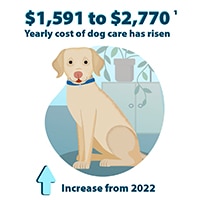
The Synchrony 2025 Pet Lifetime of Care Study found that the yearly cost of care for a dog has risen from $1,591 in 2022 to $2,770 in 2025. This is due to a variety of reasons, but partially because owners are investing more in their dogs’ health and wellness than ever before. Yet 50% of pet owners surveyed faced an expense that caused immediate concern, and 29% worried about future unexpected expenses.1

While these numbers may feel shocking, the goal isn’t to scare you — it’s to highlight the importance of planning ahead financially, and to help you prepare for expenses so you're not left scrambling if the unexpected happens.

A few ways to prepare for routine and unexpected pet costs may include:

  • Budgeting monthly for pet costs
  • Building a pet emergency fund
  • Considering a pet health-specific credit card for emergencies
  • Exploring pet insurance/wellness/discount plans (some employers now offer these as part of their benefits package)
  • Keeping up with preventive care to reduce the risk of emergencies or high-cost procedures
  • Staying consistent at home with training and exercise to prevent behavior or health issues in the future

A Little Preparation Goes a Long Way

Understanding the top costs of dog ownership, including veterinary visits, surgery costs, emergency care, ongoing medical treatments, grooming, food and training — is a first step in making sure you’re prepared for the realities of pet care.1 Proactive planning can help you manage financial stress and focus on what matters most: giving your dog the healthiest, happiest life possible.

CareCredit Credit Card Financing for Dogs 

The CareCredit credit card provides a convenient way to pay for your dog’s vaccinations and other health and wellness expenses, including exams, medications and products at providers in the CareCredit network.** Continue your wellness journey by downloading the CareCredit Mobile App. You can find a provider on the go, manage your CareCredit account and easily access the Well U blog for more great articles, podcasts and videos. Use our Acceptance Locator to find a veterinarian that accepts CareCredit to help keep your pet healthy and happy for a lifetime of love.

In addition to pet care, you can also use your CareCredit credit card for dentistry, cosmetic, vision, hearing, health systems, dermatology, pharmacy purchases, spa treatments and so much more within the CareCredit network. How will you invest in your health and wellness next?

Author Bio

Abbie Mood is a freelance writer with more than 15 years of experience. She has worked with clients of all sizes to create compelling content and she has written for the American Kennel Club, Marriott Bonvoy, Women’s Health Online, Headspace and more.

*Actual cost may vary based on geography, provider and other variables. Cost information is based on research in the 50 United States and the District of Columbia, which was conducted by ASQ360° in 2024-2025 on behalf of Synchrony’s CareCredit. Fees such as “in-office visit” may be charged in addition to the procedure costs.

**Subject to credit approval.

The information, opinions and recommendations expressed in the article are for informational purposes only. Information has been obtained from sources generally believed to be reliable. However, because of the possibility of human or mechanical error by our sources, or any other, Synchrony and any of its affiliates, including CareCredit, (collectively, “Synchrony”) does not provide any warranty as to the accuracy, adequacy or completeness of any information for its intended purpose or any results obtained from the use of such information. The data presented in the article was current as of the time of writing. Please consult with your individual advisors with respect to any information presented.

© 2025 Synchrony Bank

Sources:

1 2025 Pet Lifetime of Care Study, Synchrony. Retrieved from: https://petlifetimeofcare2025.com. (CareCredit is a Synchrony solution.)

2 2025 Synchrony Average Procedural Cost Study for Cosmetic, Dental, Veterinary, Vision and Other Practices Across the United States, conducted by ASQ360° Market Research, Cost Tables.

3 “The importance of regular vet checkups for your pet,” Central Orange County Emergency Animal Hospital. Accessed October 29, 2025. Retrieved from: https://orangecountyemergencyvet.com/the-importance-of-regular-vet-check-ups-for-your-pet

4 2024 Synchrony Average Procedural Cost Study for Cosmetic, Dental, Veterinary, Vision and Other Practices Across the United States, conducted by ASQ360° Market Research, Cost Tables.

5 “What does an emergency veterinarian do?” Ross University School of Veterinary Medicine. October 6, 2023. Retrieved from: https://veterinary.rossu.edu/about/blog/what-emergency-veterinarians-do

6 “Pet medication and prescription insurance coverage,” Pets Best. Accessed October 29, 2025. Retrieved from: https://www.petsbest.com/coverage/pet-medication-prescription-insurance-coverage

7 “How often should I get my pet groomed?” Highland Veterinary Clinic. Accessed October 29, 2025. Retrieved from: https://www.highlandvet.net/how-often-should-i-get-my-pet-groomed

8 “How often should I get my dog professionally groomed?” Madison Animal Care Hospital. Accessed October 29, 2025. Retrieved from: https://www.madisonanimalcare.com/how-often-should-i-get-my-dog-professionally-groomed

9 Jacky, Marissa. “How much does it cost to get a dog’s nails trimmed?” Not a Bully Dog Training. January 30, 2024. Retrieved from: https://notabully.org/how-much-does-it-cost-to-get-dogs-nails-trimmed/

10 “Prescription diets for pets,” Seneca Animal Hospital. March 3, 2023. Retrieved from: https://mysenecaanimalhospital.com/blog/prescription-diets-for-pets/

11 Sanderson, Sherry Lynn. “Overview of nutrition: Small animals,” Merck Veterinary Manual. Updated September 2024. Retrieved from: https://www.merckvetmanual.com/management-and-nutrition/nutrition-small-animals/overview-of-nutrition-small-animals

12 Arden, Andrea. “The importance of training dogs at every life stage,” BondVet. August 22, 2023. Retrieved from: https://bondvet.com/blog/the-importance-of-training-dogs-at-every-life-stage

13 “The best dog training apps for 2025: Train your dog on the go,” Alpine Dog Company. April 5, 2025. Retrieved from: https://alpinedogco.ca/blogs/dog/the-best-dog-training-apps

14 “How to pick a dog trainer,” VCA Animal Hospitals. Accessed October 29, 2025. Retrieved from: https://vcahospitals.com/shop/articles/how-to-pick-a-dog-trainer