
 Search
Success Strategies: Additional Revenue Streams to Fuel Audiology Practice Growth
Discover proven, practical ways audiology clinics can help boost revenue and stay resilient as payers and OTC reshape the market.
By Melissa Rose
Doctor of Audiology
Jul 17, 2026 - 15 min read



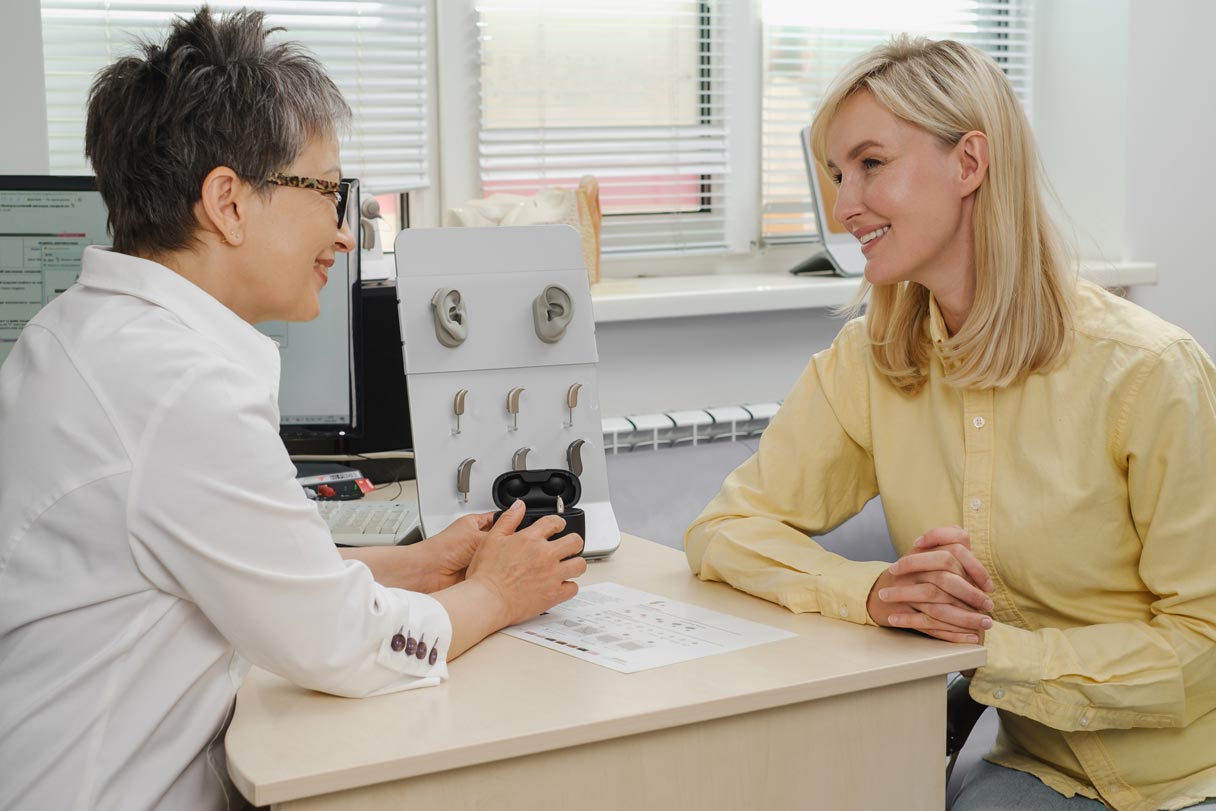
CareCredit continues to help deliver more value to help providers succeed. In the Success Strategies series, Melissa Rose, Doctor of Audiology and owner of Nardelli Audiology, shares some of what has worked for her to successfully optimize opportunities and overcome obstacles.
Practice Growth Tips for Audiology Clinicians
As we are all aware, over the past five years, the landscape of audiology has drastically changed. We have seen an increase in Medicare Advantage plans offering hearing aid coverage and large discounts through third-party entities. We have also had to navigate the new direct-to-consumer model, with over-the-counter hearing aids now available at places like Best Buy, Walmart and Amazon. Not to mention the new release of Apple’s hearing aid feature in their AirPods Pro2.
We have all likely been asked about over-the-counter options at our clinics. As a result, we have noticed that these third parties and over-the-counter options have affected our bottom line because of private pay patient loss.
I would like to discuss a few ways to make up for the lost revenue and continue to grow our practices. Despite these large industry disruptors, my practice has seen growth year after year.
Help Grow Your Practice By Integrating Third-Party Payers
The first revenue stream is how to integrate third-party payers. I am not a huge advocate of third-party payers. I am not here to try to talk you into joining all the third parties that are out there. However, in the current landscape of audiology, I do feel that it is in the best interest of my practice to explore these third-party payers and see if they can be a fit.
Identify Local Third-Party Payers
The first step that I took in this process was to explore which third party had the largest impact in my state of West Virginia. This is likely going to vary from state to state. For many years, we chose not to contract with any third-party payers.
However, about five years ago I realized that there were more and more patients with these third-party benefits, and most of them were not willing to forgo their hearing aid benefits to stay with our practice as private pay patients.
Calculate Billable Hours
I decided the best thing to do was to calculate our billable hour to see if working with a third-party would be a profitable option for us.
If you’re not sure how to calculate your billable hour, take your labor cost and overhead and divide it by your available hours. If this is not something that you have done recently, it is a great exercise to help you set competitive pricing for all of your services and to help you analyze if accepting a third-party payer is profitable.
Billable hours formula: labor cost + overhead / available hours = billable hours
It is also important to look at other third-party options that are not directly tied to insurance companies. In the state of West Virginia, we have rehabilitation services, which we have worked with for years. We are also contracted with the state to do all the disability testing statewide and with workers’ compensation.
Your state may also have some unique third parties that you want to look at. For example, in West Virginia we have unique third-party payers for the coal mining industry, and we have worked with them for over 20 years.
Integrate Third-Party Payers
Once you have decided that third-party payers are going to be profitable for you, you have to figure out a way to integrate them. The question is: how do we integrate third-party patients into the workflow while still maintaining best practices for both third-party patients and private pay patients?
When you have a smaller staff, like we do, it is very important to look at each of your providers’ strengths in the clinic and find out what they really enjoy doing. Do they enjoy selling hearing aids or do they really enjoy diagnostics?
Once you have identified your providers’ strengths, you can start to adjust your schedule to accommodate different types of patients and different types of appointments. Sometimes this can mean having a dedicated staff member to assess and treat third-party patients. It is okay to have certain staff members work with third-party patients while others do not. Not every staff member has to participate.
Performing Compensation and Pension (C&P) Exams for Practice Growth
The next thing I want to talk about is Compensation and Pension Exams, otherwise known as C&P Exams. There are big companies that audiologists can have a contract with. The way C&P Exams work is audiologists get a contract with a 3rd party veteran company to perform hearing evaluations of veterans to assess the extent of any service-related hearing impairment.
How To Select Your C&P Company
You can pick and choose which companies you would like to work with. When making your selection, it is worth noting that there are differences in how companies operate, such as payment schedules, payment methods and rates. There are also differences in how they schedule patients. Some companies use block scheduling, while others call you for every appointment or provide a portal you can log into.
I encourage you to do your research and pick one that fits your clinic and workflow. You then get to decide how many veterans you want to see each day and each week, making it a fantastic way to keep your schedule full.
These exams do take some practice, as you will be required to gather the veteran’s military history and review their C file. While it takes time to learn the verbiage and how to write the reports, with a little practice and time, you will become more comfortable and be able to complete testing and the DBQ for most veterans in about an hour.
C&P exams are another area where you can choose which provider will work with veterans. I will say it again — knowing your providers’ strengths can really improve the flow of your schedule. It also ensures you have happy employees because they are doing what they love.
It is so important that your clinic has consistent revenue that’s not solely tied to the sale of hearing aids. There are always going to be slow months, and having consistent revenue streams, you can guarantee a full schedule that meets your billable hours during the slow times of the year.
Hearing Conservation Education as a Growth Path
We all know audiology is rapidly evolving, and for us to remain competitive and profitable, we must adapt and expand our services. Hearing conservation is one area that holds significant potential for growth. By offering hearing conservation services, you can tap into new and diverse markets that you might not have considered in the past.
How To Get Involved With Hearing Conservation
OSHA testing is by far the easiest way to get involved in hearing conservation. Connecting with workplaces and offering these services can lead to long-term relationships. You can provide annual testing, new hire baseline assessments and retesting for these companies.
Once you’re established with these companies, you create another consistent revenue stream that allows you and your practice to expand steadily rather than solely relying on diagnostics and hearing aid sales.
Alternative Ways To Contribute Beyond OSHA
Some audiologists are hesitant to get involved in hearing conservation, perhaps because they’re unfamiliar with OSHA regulations or don’t have the software to provide the proper documentation to these companies. However, there are multiple ways to participate in hearing conservation that do not always require specialized software.
- Educational programs. You can offer educational programs on hearing protection, conduct hearing screenings at local events or partner with organizations to raise awareness about noise-induced hearing loss. Doing so can help elevate your practice’s presence in the community, which is something we should all strive to achieve.
- Consulting services. Consulting with workplaces can also improve your reputation and visibility in the community. You could potentially sign a contract with a company that has over a hundred employees, introducing all of them to your office and staff. This exposure can lead to some of them needing hearing aids and returning to you as private patients — we have had this happen many times. Additionally, they might refer a family member or friend to your practice because they are familiar with your staff.
How To Market Hearing Conservation Services
As more people become aware of the long-term effects of noise exposure, they will seek out an audiologist for preventative services. You want to be the first place they think of, here are some tips to market your services.
- Online presence. It is important that your website and social media platforms showcase your involvement in hearing conservation. You want to ensure that companies can find you when searching for keywords related to hearing conservation, OSHA testing or hearing protection.
- Networking and referrals. Many companies use mobile vans for testing, this could be a networking and referral source for you. If this is something you’ve been considering, there are still ways to work with and connect with those companies. We have companies in our area that use mobile vans, and we reached out to them. Now, we are the place that handles the retests and where patients go if they miss the van on the scheduled day. We have also had companies switch from mobile vans to our services once they realized how reliable we were and how few retests were required. So don’t let mobile vans discourage you — reach out to these companies and see where you can fill in the gaps.
Custom Hearing Protection as a Service
If you are not entirely comfortable with hearing conservation that involves extensive testing and consulting, you can still participate. Custom hearing protection is a great revenue stream that is often overlooked in hearing conservation. If the opportunity presents itself, explain to the companies you’re working with — especially their Human Resources department — how effective and comfortable custom hearing protection can be for their workers.
When meeting with safety managers to set up appointments, I recommend always having a set of custom hearing protection with you. I always carry an example set that I can wear and show them. You can even invite them in before the appointment for impressions and make them a set of hearing protection to wear in their workplace — we have done this many times.
If you’re interested in incorporating this into annual hearing tests, it can be helpful to have a second provider available to take impressions, package them and prepare everything for shipment. This is the system we use in our practice, and it ensures a smooth process when seeing many patients in one day.
There are ways to be involved in hearing protection on a large scale while making it work for you. On multiple occasions, companies have asked us to come to their facility and take impressions for over a hundred workers in a single day. When this happens, we charge the company an onsite fee, which they have never had an issue with. We do this because we essentially have to shut down our practice for the day to assist them, allowing them to avoid shutting down their operations to send 100 employees our way. There are ways to be involved in hearing protection on a large scale while making it work for you.
I highly recommend contacting the manufacturer you plan to send impressions to ahead of time. It is helpful to ensure they have the necessary materials in stock and to coordinate shipping. For large orders, we have found it easiest to have everything shipped at once so that we receive everything back at the same time, reducing workload for our staff.
Add Complementary Services For Another Revenue Stream
The next thing I want to talk about is cerumen removal. Cerumen removal is another revenue stream that can be easily added to your practice. If you plan to offer this service, it is important to make sure patients are aware of it. Cerumen removal can enhance patient care and prevent the need for referrals. Referring out means losing valuable clinic time, and you may even lose the patient.
Cerumen management can be incorporated into a patient’s initial consultation, a hearing aid evaluation, a follow-up appointment or even routine hearing aid maintenance visits. If you’re going to do this, make sure that you set clear protocols and training for your staff. It is important that your audiologists and staff are well-trained in identifying impacted cerumen as well as differentiating between normal and excessive buildup. The more you do it, the more you will be able to identify those things and the easier the process will become.
We have patients who have routine scheduled appointments for cerumen removal. It helps keep hearing aids clean and cuts down on maintenance for the patient — which is especially helpful for patients who have a hard time cleaning their own hearing aids and changing wax filters.
Your protocol should include assessing the patient’s ear, determining the need for cerumen removal and then deciding on the safest approach. As we all know, there are a couple of ways you can tackle cerumen removal, such as manual removal, which includes techniques like using a curette or suction. There is also irrigation, which is especially useful for soft, sticky wax.
We tend to use irrigation at our clinics and currently use the Earigator. It has been extremely easy for us to learn how to use, and it has been well-tolerated by patients. It is unlikely that a patient will experience much discomfort when using irrigation, which is the method we have been using for the last four or five years.
It is also important to have a protocol for when to refer out. We have patients who come through our clinic with a surgical ear, a perforated eardrum or possibly an infection — conditions that are contraindicated for us to treat. That is why we have a process in place to refer those patients to an ENT.
As we all know, many insurances do not currently pay for cerumen removal. However, if you’re working with one of the contractors for the C&P exams, they do pay for cerumen removal. Make sure that you have this in your contract when you first set it up so you don’t have to stop and get approval.
It has been our experience that patients have no problem paying for this service now, because it is a covered service for patients if they go to their family doctor, an ENT or a quick care. Before making an appointment, we inform our patients that their insurance covers this service, just not at our location. We give them the option to go somewhere else and use their insurance.
We also offer cerumen removal services to our hearing conservation partners. It is already part of our contract with them, so we do not need to stop and get approval. Everything is preemptively approved and authorized so our workflow is not interrupted.
Offer Patient Financing Options
The last thing I want to discuss is financing. I know this is not a direct revenue stream. However, having a financial partner that patients can rely on to help with the purchase of their hearing aids has been crucial to our growth. Offering financing options in an audiology practice helps ease cost concerns for patients, allowing the practice to serve a wider range of people.
Loyalty and repeat business are something we have seen by offering financing options. You foster patient loyalty when patients feel that their financial concerns have been considered, which we always want to do. When you take a patient’s financial situation into consideration when offering the treatment plan, they are more likely to return for upgrades and ongoing care. As you already know, repeat business contributes to a steady stream of revenue.
Additionally, when attracting new patients, financing options can be a key differentiator in a competitive market. Offering flexible financing options can attract new customers who are looking for more financial flexibility when choosing an audiology provider. I can say firsthand that working with the CareCredit credit card and Allegro Credit has been a game changer for my practice.
 View PDF
Ready to help more patients and clients get the care they want and need?
Get Started
Related Content
View All

 Guides

Ready to help more patients and clients get the care they want and need?
Get Started*Subject to credit approval.
The information, opinions and recommendations expressed in the article are for informational purposes only. Information has been obtained from sources generally believed to be reliable. However, because of the possibility of human or mechanical error by our sources, or any other, Synchrony and any of its affiliates, including CareCredit, (collectively, “Synchrony”) does not provide any warranty as to the accuracy, adequacy, or completeness of any information for its intended purpose or any results obtained from the use of such information. The data presented in the article was current as of the time of writing. Please consult with your individual advisors with respect to any information presented.
© 2026 Synchrony Bank.