
 Search
Key Takeaways
- Lazy eye can often be corrected with early treatment using glasses, eye patches, drops or vision therapy, and surgery may be needed in more severe cases.
- The national average cost of non-surgical lazy eye treatment ranges from $119 to $9,000 depending on the method, while strabismus surgery typically costs between $3,800 and $9,643 without insurance.
- CareCredit can help cover out-of-pocket expenses for lazy eye treatment, including costs not covered by insurance.*
Lazy eye is often an inherited disorder that can be corrected if detected early enough. Correcting a lazy eye is not just about aesthetics. Left untreated, a lazy eye that begins in childhood can actually cause vision complications later in life.
What Is a “Lazy Eye"?
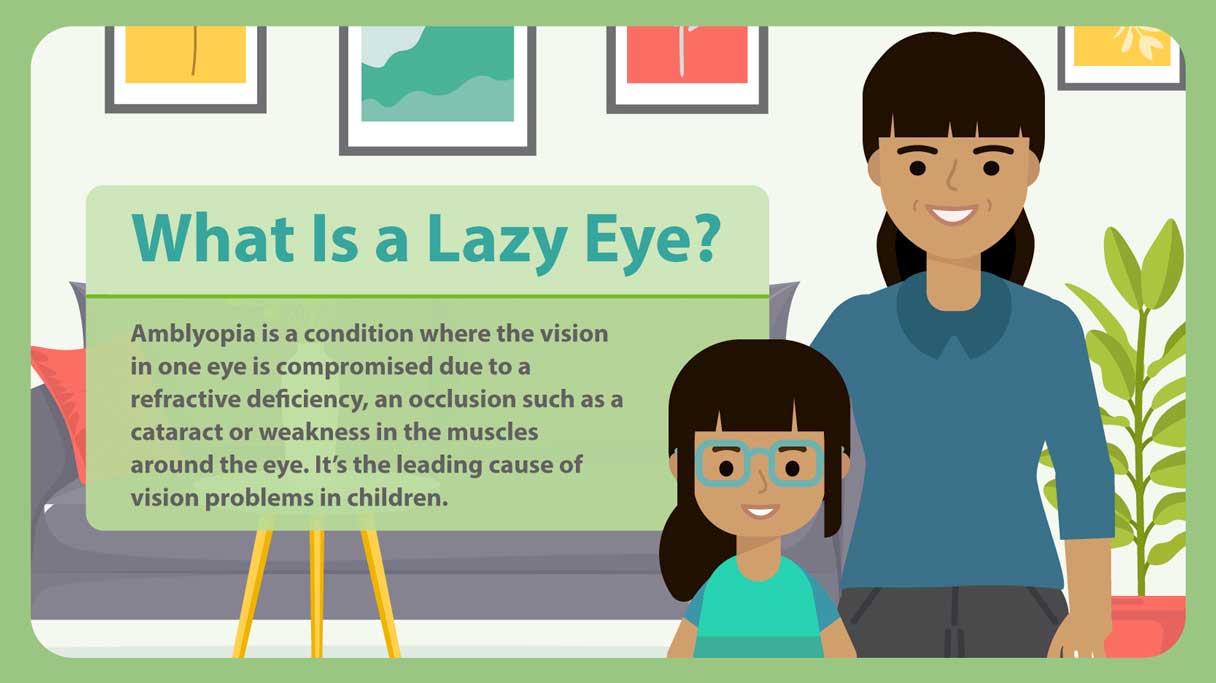
Amblyopia, sometimes called “lazy eye" or “wandering eye," is a condition in which the vision in one eye is compromised due to a refractive deficiency, an occlusion such as a cataract or weakness in the muscles around the eye (also called strabismus). The eyes are unable to work together to send good visual signals to the brain, often causing blurred vision. In time, the brain learns to rely on signals only from the “strong" eye, and ignores the blurry vision in the weaker eye, leaving the visual paths of the amblyopic eye to atrophy.
Lazy eye affects approximately 3% of children from birth to 7 years of age and is the leading cause of vision problems in children. In some cases, it can cause partial, or rarely, total blindness in one or both eyes. Amblyopia typically affects one eye, but rarely both — and the condition is not always obvious, especially in a young child. An eye exam is needed to properly diagnose amblyopia.


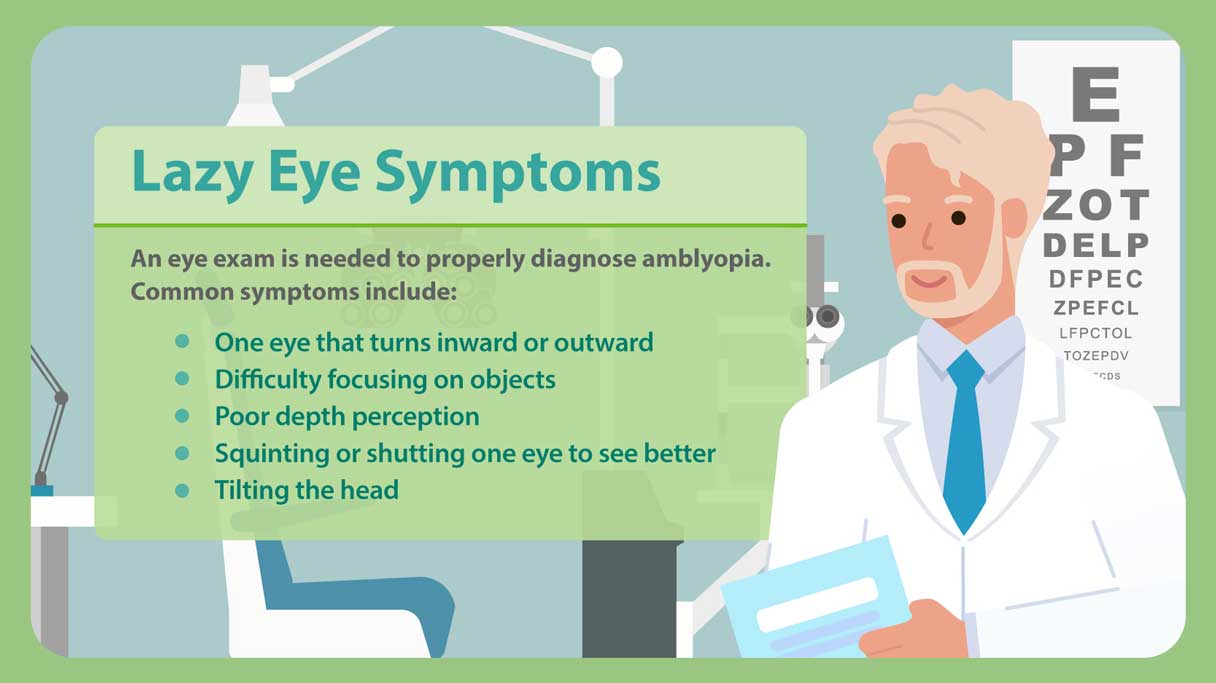
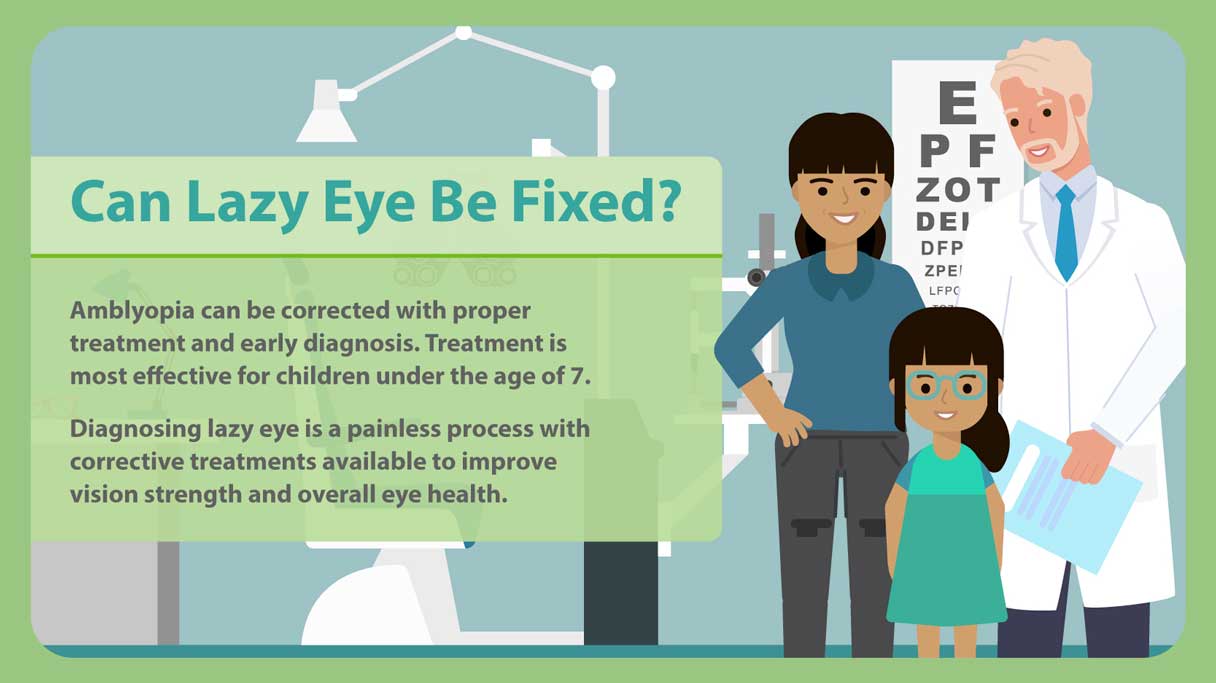
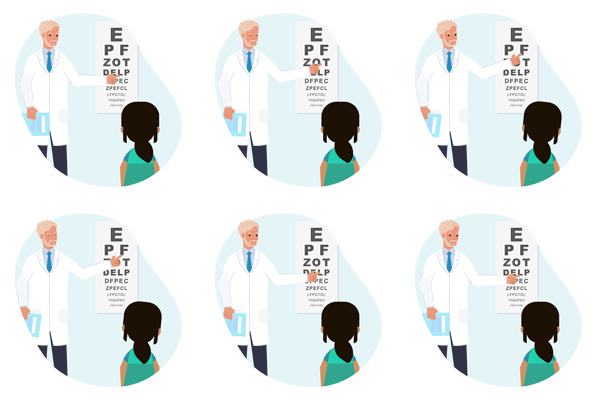
Lazy eye can usually be corrected with proper treatment, and ideally, early diagnosis.
Treatment for amblyopia is most effective for children under the age of 7, the period of development when the neural pathways connecting the eyes to the brain are formed. Treatment for lazy eye can still be effective in older children, teenagers and adults, so it's worth discussing with a healthcare provider, regardless of a patient's age. Left untreated, amblyopia could result in partial or complete blindness in the impacted eye, as well as other lifelong vision problems, affecting a patient's overall quality of life.
Diagnosing lazy eye is a painless, relatively simple process, with several corrective treatments available to improve vision strength and overall eye health.
Options to Fix a Lazy Eye
The earlier amblyopia is diagnosed and a patient begins treatment, the more effective results will be in strengthening the eye muscles and improving vision coordination.
Ideally, diagnosis and treatment should be started as soon as the problem is detected, even in infants, since the benefits of treatment decrease significantly after the age of 7.
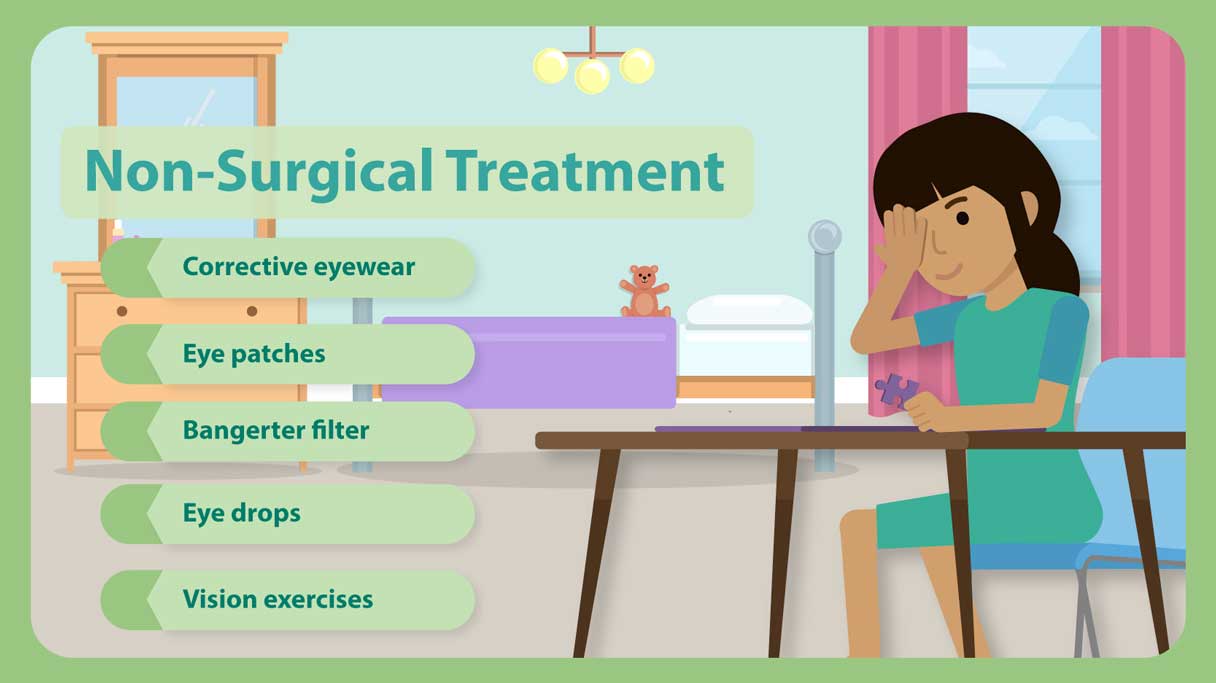
Non-surgical treatments for lazy eye
- Corrective eyewear. If a child's amblyopia is attributed to a visual problem such as nearsightedness, farsightedness or astigmatism, an optometrist or ophthalmologist will typically write a prescription for corrective glasses or contact lenses.
- Eye patches. Once the vision has been corrected with glasses or contacts, the stronger eye should be covered with an eye patch for two to six or more hours per day, which can help stimulate the weaker eye. Treatment will vary based on the age of the patient, the severity of the poor vision and when the problem was diagnosed. Decorated patches for children can encourage young patients to wear their patch for the prescribed length of time.
- Bangerter filter. If the patient already wears eyeglasses, a Bangerter filter can be attached to the eyeglass lens of the stronger eye to blur vision in that eye, therefore stimulating the lazy eye.
- Eye drops. A prescription medication called atropine can be used to temporarily blur vision in the dominant eye, forcing the weaker eye to become stronger. Eye drops may be prescribed for weekend or daily use and are considered easier for a child than an eye patch. Side effects of atropine may include light sensitivity or eye irritation.
- Vision exercises. Vision therapy with games and exercises designed to improve vision can strengthen the muscles of the affected eye. Activities may include coloring in special workbooks, dot-to-dot drawing, building blocks, word games, puzzles, reading or some video games designed specifically for improving vision. These may be done in combination with other treatments.
Surgical treatments for lazy eye
While an optometrist or ophthalmologist may first prescribe non-surgical treatments to correct a lazy eye, they may ultimately recommend surgical repair to reduce the long-term risk of vision loss.
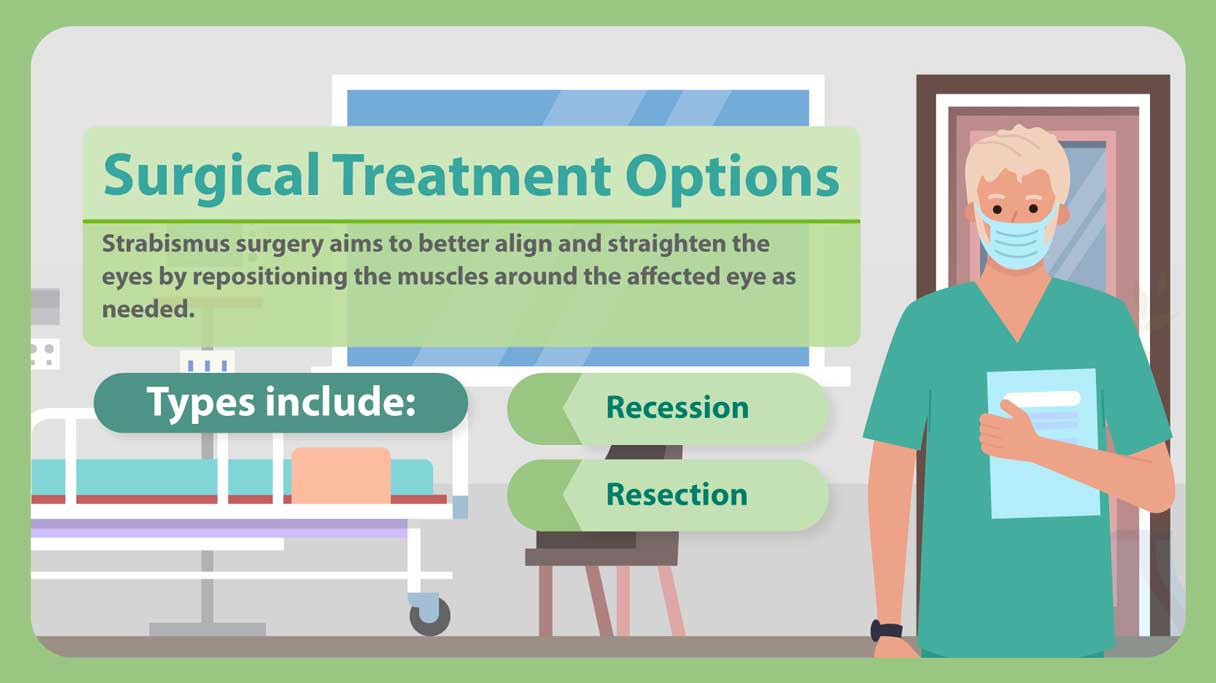
When a lazy eye is caused by muscle imbalance (strabismus), surgery can be performed on adults or children. It aims to better align and straighten the eyes by repositioning the muscles around the affected eye as needed.
There are two types of strabismus surgery:
- Recession. The eye muscle is cut and reattached in a weaker position further away from the front of the eyeball to reduce the resting tension of the muscle.
- Resection. This procedure strengthens muscle function by removing a portion of the muscle and then reattaching it to its original position on the eyeball, not unlike removing part of a rubber band, but stretching it to its original length.
Surgery can also help correct a lazy eye caused by deprivation amblyopia, in which vision is blocked by a droopy eyelid, cataract or a corneal ulcer.
Costs of Lazy Eye Treatments
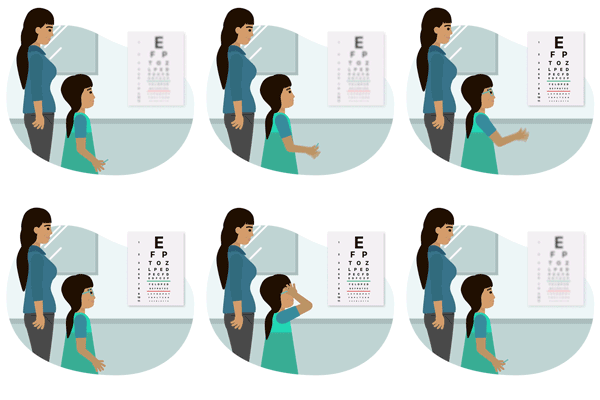
Treatment for lazy eye is usually covered by most health insurance plans as it's not considered a cosmetic treatment. For patients with insurance, out-of-pocket costs may include copays, prescription copays or coinsurance of 10% to 50%.
Non-surgical costs
The national average cost* of prescription eyeglasses for amblyopia can range from $119 to $523, depending on the type of lenses and any additional coatings. Eye patches are relatively inexpensive, with adhesive ones priced between $9 and $23, while Bangerter filters cost between $6 and $15 each.1
Prescription eye drops such as atropine can cost around $17 for 2 milliliters.2 Vision therapy to attempt to align the eye properly can cost between $175 and $200 per session, but typical treatment can range from $1,000 to $9,000.3
Surgical costs
Strabismus surgery costs will vary based on geographic location but typically range from $3,943 to $9,358 for recession and $3,800 to $9,643 for resection without insurance.1 Because strabismus is considered a medically necessary surgery and not cosmetic, most insurance plans will cover a good portion of the surgery — minus deductibles — greatly offsetting out-of-pocket costs.
Factors that can affect the cost of strabismus surgery include:1
- Hospital location
- In- or out-of-network doctor or surgeon
- Surgeon's credentials, experience and area of expertise (ophthalmologist or ocular surgeon)
- Severity of the condition
- Pre- and postsurgical care
- Anesthesiologist fees
- Surgical facility fees
- Type of sutures used
If you're concerned about your child's vision and suspect they may have amblyopia, don't put off seeing a healthcare professional for a vision screening. The sooner you receive a diagnosis, the sooner treatment can begin and the more likely it is to be effective.
CareCredit Credit Card Financing for Lazy Eye Treatments
Whether you're paying for eye surgery or getting an eye exam, the CareCredit credit card can help you pay for care where your insurance leaves off.** Use our Acceptance Locator to find a vision specialist near you that accepts CareCredit. Continue your wellness journey by downloading the CareCredit Mobile App to manage your account, find a provider on the go and easily access the Well U blog for more great articles, podcasts and videos.
In addition to vision care, you can also use your CareCredit credit card for dentistry, cosmetic, pet care, hearing, health systems, dermatology, pharmacy purchases, spa treatments and so much more within the CareCredit network. How will you invest in your health and wellness next?
Expert Reviewer
Dr. Alexandra Chebil, M.D., F.R.C.S.C.
Dr. Alexandra Chebil is a board-certified ophthalmologist with the Lasik Center Medical Group in Newport Beach, California, who has more than 25 years of experience with refractive surgery and non-invasive facial aesthetic procedures. She was one of the first ophthalmologists to perform LASIK, and has successfully performed more than 70,000 procedures.
Author Bio
Anne-Marie Kennedy is a freelance writer with more than 20 years of experience covering health and wellness, personal finance and real estate/investing.

Related Tags
Want to share this on social media?






 ARTICLE