
 Search


Key Takeaways
- Your dog’s size and temperament, as well as whether you plan to use the crate at home or during travel, will determine which crate is best for you.
- A correctly sized crate should allow your dog to stand, turn around and lie down comfortably.
- A dog’s crate should be a safe space, but they may need training to feel comfortable in it — consult your vet or a professional dog trainer for help with crate acclimation.
A dog crate can do a lot — from supporting house training to giving your pup a safe, cozy place to rest at home or on the go. But the right crate depends on your dog’s size, behavior and how you plan to use it. With so many options available, it can be hard to know where to start.
This guide describes the most common crate types and what to consider so you can make a confident decision for your dog.
Dog Crate Types and Styles
Not all crates are created equal — choosing the right one depends on your dog’s physique and personality, as well as your lifestyle as their owner. From classic wire crates that work well in most homes to heavy-duty options built for determined escape artists, each type has its strengths — and weaknesses.
Here are the pros and cons of the most common crate styles to help you find the right fit for your dog.
Wire crates
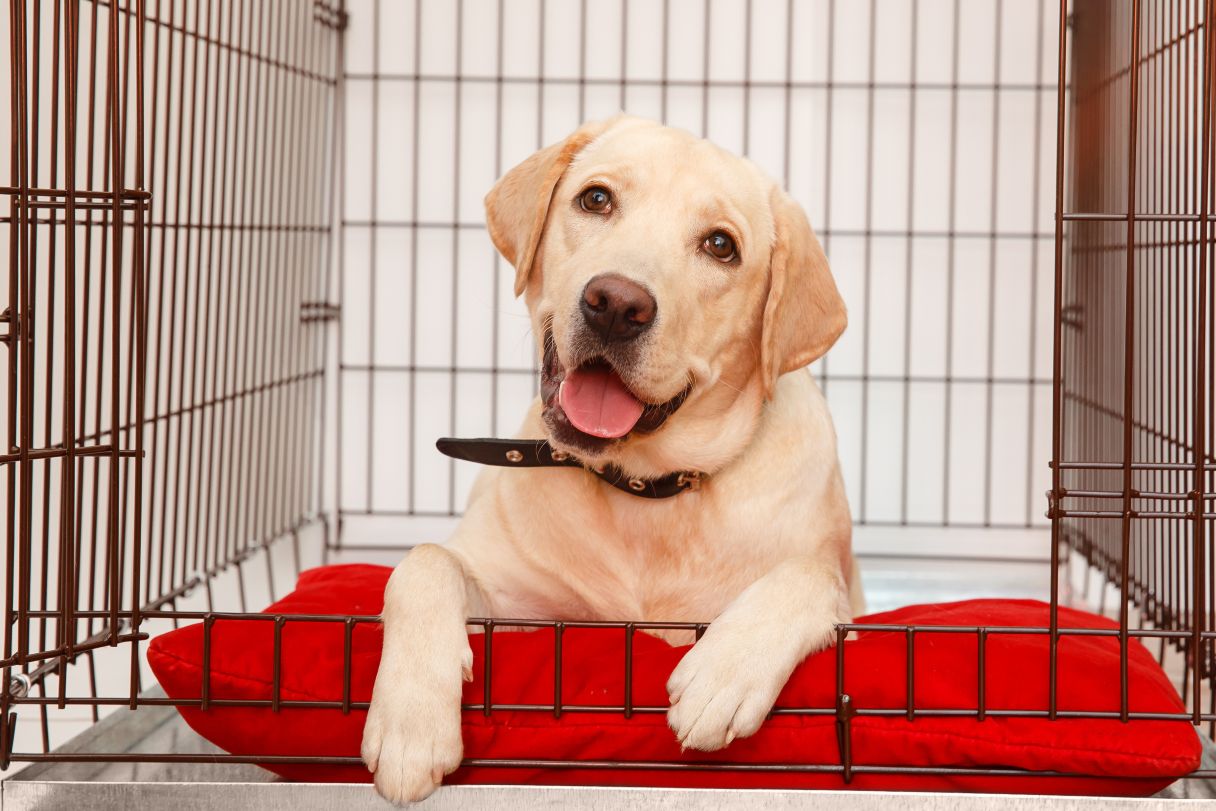
Wire crates are the most popular all-around option and a great starting point for many dogs.
- Pros. Wire crates offer excellent airflow and visibility, and many models fold flat for easy storage. They can also be used with a divider panel, which is especially helpful for adjusting the crate size as puppies grow.
- Cons. Wire crates can be noisy when your dog moves around. You may also need to purchase a cover if your dog prefers their crate to feel more like a den. This type may not be a good choice for dogs with anxiety, as they might chew on the bars and damage their teeth.
Plastic crates
Plastic crates are best for travel, easy cleanup and nervous dogs who prefer enclosed environments.
- Pros. Plastic crates provide a more enclosed, den-like environment, which can help anxious dogs feel calmer. They’re also good for containing messes and are easy to clean if your dog has an accident. They’re especially useful for air travel and car rides because many meet airline carrier requirements.
- Cons. Because plastic crates are more enclosed than wire kennels, they provide less airflow and visibility. They can also retain heat in warm weather and take up more room when not in use.
Soft-sided crates
Soft kennels — made from fabric and mesh stretched over a lightweight frame — are best suited for short-term use, portability and dogs who are already comfortable being crated.
- Pros. They’re portable, light and convenient, and can be a good choice for calm, well-trained dogs. They tend to work best for small dogs as a temporary option — such as during travel.
- Cons. The durability and quality of soft dog kennels can vary, and they’re not a good choice for anxious dogs who might chew or scratch the fabric to try to escape. Additionally, the fabric can be difficult to clean if your dog has an accident.
Heavy-duty crates
Heavy-duty crates are built with reinforced steel or aluminum and strong latching systems that are best for large, strong or escape-prone dogs.
- Pros. They are known for their durability and are designed for dogs who need extra-secure containment. They provide maximum security and peace of mind for pet owners with dogs who are prone to breaking out of standard crates.
- Cons. Because these crates are built with robust materials, they can be more expensive and heavier than other crate types. They’re not a good choice for travel and may be excessive for small or calm dogs.
Furniture-style crates
Furniture-style crates are ideal for everyday home use in shared living spaces where appearance and function both matter.
- Pros. Furniture-style crates double as end tables, credenzas or other home decor pieces, so they blend into your living space while providing your dog a dedicated spot to rest.
- Cons. The quality and durability of furniture-style crates can vary widely. Most are not ideal for heavy chewers, very large dogs or puppies. They also typically cost more than other crate styles because of the extra materials and design details.
How Big Should a Dog Crate Be?
When choosing a crate, a general rule of thumb is that your dog should be able to stand up without crouching, turn around easily and lie down in a natural position.
If a crate is too small, it can feel cramped and uncomfortable. If it’s too large, it may make potty training more difficult, as dogs are more likely to use one side as a bathroom.
How to Measure a Dog for a Crate
To choose the best crate size, you’ll need to take a few simple measurements of your dog. Here’s how to find the right fit:
- Step 1: Measure your dog’s length. With your dog standing, measure them from nose to tail. Add two to four inches to determine the correct crate length.
- Step 2: Measure your dog’s height. With your dog standing, measure from the ground to the top of their head or ears (whichever is taller). Add two to four inches to determine the correct crate height.
- Step 3: Adapt to growth. If you have a puppy, you should buy a crate that will fit their expected adult size and use a divider panel to adjust the space as your puppy grows.
Dog-Specific Considerations
Although your dog’s measurements are key to choosing a crate, there are other factors to consider as well.
Age
A wire crate with a divider panel is a good choice for puppies because it lets you adjust the interior space as they grow. For young adult dogs, choose crate materials that can withstand adolescent chewing. For older dogs, choose a crate with easy entry and that accommodates soft, supportive bedding to cushion sore joints.
Behavior
Dogs who get overwhelmed by activity or noise may do better in a plastic kennel or a wire crate covered with a blanket or specialized crate cover. If you have a large or strong dog, a heavy-duty option may be your best bet.
It’s important to train your dog to accept the crate before using it. A dog who tries to break out of a crate when you’re away could have separation or confinement anxiety. Consult a professional trainer or your veterinarian for help.
Body type
Standard crate dimensions may not account for the variety of different body types that dogs can have. For example, a tall, long greyhound will need a different-sized crate than a short, compact bulldog — even if they are the same weight.
Dog Crate Safety Features
Before you buy a crate, check for these important safety and comfort features:
- Secure latches. Latches should close firmly and stay shut. Double-latch or slide-bolt designs offer extra security.
- Smooth edges. There should be no sharp wires, rough seams or protruding hardware that could scratch or poke your dog.
- Appropriate bar spacing. For wire crates, the gaps between bars should be narrow enough to prevent a paw or muzzle from getting stuck.
- Stable design. The crate should sit flat and not wobble or tip when your dog moves around.
- Good ventilation. Adequate airflow is important for plastic and soft-sided crates. Look for multiple ventilation openings to keep your dog comfortable.
- Easy-to-clean tray. A removable, washable tray makes cleanup simple if your dog has an accident or spills food.
Dog Crates for Home and Travel
How you plan to use your dog’s crate can influence the type and setup that will work best. If you travel frequently, you may want more than one crate — one for home use and another for trips.
Dog crates for home
At home, place the crate in a quiet area near a main living space so your dog can still see and hear family members for comfort. When introducing the crate, start with short periods of time and gradually increase the duration, using treats and toys to create a positive experience.
Dog crates for travel
For car travel, choose a crate that fits securely in your vehicle and provides good ventilation. A soft-sided, pop-up style kennel can be a convenient option and may help your dog feel more comfortable on the go.
For air travel, you’ll need a crate that meets airline requirements for size, materials and labeling.
Do Vets Recommend Dog Crates?
In most cases, veterinarians recommend crate training and the routine use of crates for dogs of all ages, sizes and breeds. Confining curious puppies can prevent them from getting into something dangerous when you aren’t home. It also gives them a comfortable place to go when they are overwhelmed or stressed.
Veterinarians also recommend using a crate to house train puppies. Keeping them in a crate with minimal extra space discourages them from soiling their sleeping area.
Just remember that a crate should never be used to punish your dog. Don’t force your dog into their crate or make them use it if they become anxious or destructive when confined. If you notice this behavior, consult a veterinary behavior professional for help.
Why crate training matters
Even older, well-behaved dogs may need to be crated in some situations. For example, they may need to be boarded during a vacation, hospitalized at the vet or confined when a repair person or guest comes to your home. For those and other possible reasons, vets recommend that all dogs learn to remain calm in a crate.
Finding the Crate That’s Right for Your Dog
Understanding the different types, how you and your dog will use the crate and the various factors to consider can help you choose the best crate for your dog. Matching the crate to your dog’s needs and pairing it with a positive training protocol sets the stage for a successful experience. If you notice your dog becoming anxious in the crate or trying to escape, consult your vet or a trainer for help.
CareCredit Credit Card Financing for Dogs
Taking good care of your pet’s well-being from nose to tail is essential. Make sure to stay up to date on their regular checkups at the vet to help keep your pet happy and healthy for a lifetime of love. You can use your CareCredit credit card for pet care throughout the year for routine veterinary services, emergencies and surgeries.* Use our Acceptance Locator to find a veterinarian near you that accepts CareCredit.
CareCredit is there for you and your pet every step of the way; continue your wellness journey by downloading the CareCredit Mobile App to manage your account, find a provider on the go, and easily access the Well U blog for more great articles, podcasts and videos.
In addition to pet care, you can also use your CareCredit credit card for dentistry, cosmetic, vision, hearing, health systems, dermatology, pharmacy purchases, spa treatments and so much more within the CareCredit network. How will you invest in your health and wellness next?
Author Bio
Angela Beal, D.V.M., has more than 20 years of experience as a veterinarian. Leveraging her background in private practice and academia, she uses her passion for writing to convey information to pet owners to help them keep their pets healthy and happy.

Related Tags
Want to share this on social media?





 ARTICLE